Learning Japanese in Tokyo Without Quitting Your Job
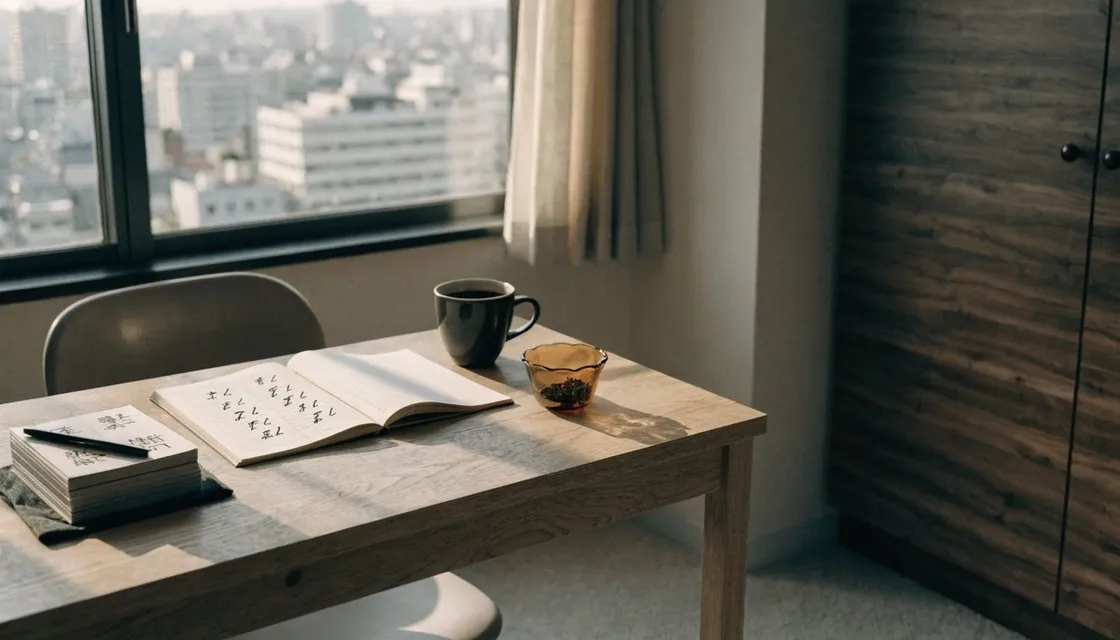
You do not need fluent Japanese to live and work well in Tokyo, and you will not reach fluency in the months most nomads stay. That gap is where a lot of people give up before they start. The useful move is to aim lower and more precisely: learn the hundred or so words and phrases that carry ninety percent of daily life, get comfortable reading a handful of everyday symbols, and let real fluency stay optional. Done that way, a little Japanese pays back fast, and the city becomes noticeably warmer.
The reason to bother is not politeness alone. Tokyo runs on a lot of small verbal transactions, at the register, the clinic, the ward office, the izakaya, and each one goes smoother when you can meet it halfway. You will also find that locals relax the moment they see you trying, even badly. The effort itself is the signal.
The goal is not to sound Japanese. It is to stop being helpless in the twenty situations you actually hit every week.
Start with survival, not grammar
The fastest wins come from a short list of set phrases you can deploy without thinking. Greetings, thank-yous, apologies, and a few functional lines cover an astonishing share of interactions. Sumimasen alone does heavy work: it means excuse me, sorry, and thank you depending on tone, and it opens almost any exchange with a stranger. Add arigatou gozaimasu, onegaishimasu, daijoubu, and a way to ask “do you have this” or “where is this,” and you can already move through a day.
Numbers and counters come next, because they unlock prices, platforms, portions, and time. You do not need the full counter system that trips up learners for years. You need to recognize numbers when a cashier says them and, ideally, to read them, which is often easier than hearing them at speed.
Notice what is missing from this list: grammar. Verb conjugation and particle theory are genuinely useful later, but they are a slow way to get to your first real conversation. Many nomads find that front-loading phrases builds enough momentum to make the grammar feel worth it afterward, rather than the other way around.
Learn to read before you can speak
This sounds backward and is one of the more practical things about Japanese in Tokyo. Reading a small set of common characters removes a surprising amount of daily friction, and it is a skill you can practice silently on any train.
Hiragana and katakana, the two phonetic scripts, are learnable in a couple of focused weeks and pay for themselves immediately. Katakana in particular is a shortcut, because it spells out imported words: menu items, coffee, hotel, many place names. Once katakana clicks, a lot of Tokyo suddenly reads as slightly accented English.
A pocket of survival kanji is the next layer. The characters for entrance and exit, man and woman, open and closed, north, south, east, west, yen, and a few station and food words will orient you through most signage. You are not trying to read a newspaper. You are trying to never again stand confused in front of a bathroom door or a closed shop.
Build a routine that survives a work week
The honest constraint for a remote worker is time and consistency, not ability. Ten focused minutes every day beats a three-hour cram once a week, and it fits between calls. Most people who make progress here anchor study to something they already do: a flashcard deck on the morning train, a lesson while the coffee brews, a review before bed.
Spaced-repetition apps do the heavy lifting for vocabulary and kanji, and they are built precisely for busy, interrupted schedules. Pair one with a beginner course or textbook so you get structure alongside the drilling, and you have a system that runs on autopilot. The trick is lowering the daily bar until skipping feels harder than doing it.
Living in Tokyo hands you a study environment for free. Read the signs you walk past, order in Japanese even when the staff would happily switch to English, and treat the konbini as a daily speaking exercise with very low stakes. The city is one long, gentle immersion if you let it be.
Where to get real practice with people
Apps and books plateau without human contact, and Tokyo has plenty of low-pressure ways to add it. Language exchange meetups pair you with locals who want to practice English, so the trade is even and no one is a tutor. These run often across the city and are among the easier ways to also make friends, which matters more than the language gains.
For structure, the city is full of language schools running everything from intensive daytime programs to a single evening class a week. Private and online tutors, booked by the hour, suit an irregular travel schedule better and let you steer lessons toward the situations you keep fumbling. If your stay is long enough, a part-time course adds a rhythm and a small cohort, both of which help more than most people expect.
Whatever route you choose, use what you learn the same day. A phrase practiced in a lesson and then said out loud at dinner sticks in a way that no amount of review can match.
Keep expectations kind
Progress in Japanese is famously non-linear, and the early plateau where you understand more than you can say is normal, not failure. Most nomads who stick with it describe the same arc: a fast, thrilling start with survival phrases, a long flat stretch that feels like nothing is happening, and then a slow realization that they are catching words on trains and reading half the menu without trying. The flat stretch is the work. It is not a sign to stop.
Be gentle with the goal, too. A few months in Tokyo will not make you fluent, and it does not have to. It can make you capable, comfortable, and visibly willing, and in a city that quietly rewards effort, that turns out to be most of the benefit.
FAQ
Do I really need Japanese to live in Tokyo as a nomad? No, you can survive on English and translation apps, especially in central areas. But a small amount of Japanese removes daily friction and warms up nearly every interaction, so the return on a little effort is high.
What should I learn first? Survival phrases built around sumimasen, plus the two phonetic scripts, hiragana and katakana. Katakana especially pays off fast because it spells out many imported words you already know.
How much time does it take to see progress? Ten consistent minutes a day, anchored to an existing habit and backed by a spaced-repetition app, produces noticeable gains within a few weeks. Consistency matters far more than long sessions.