Koenji for Remote Workers: Tokyo's Cheap, Loud, Creative Base
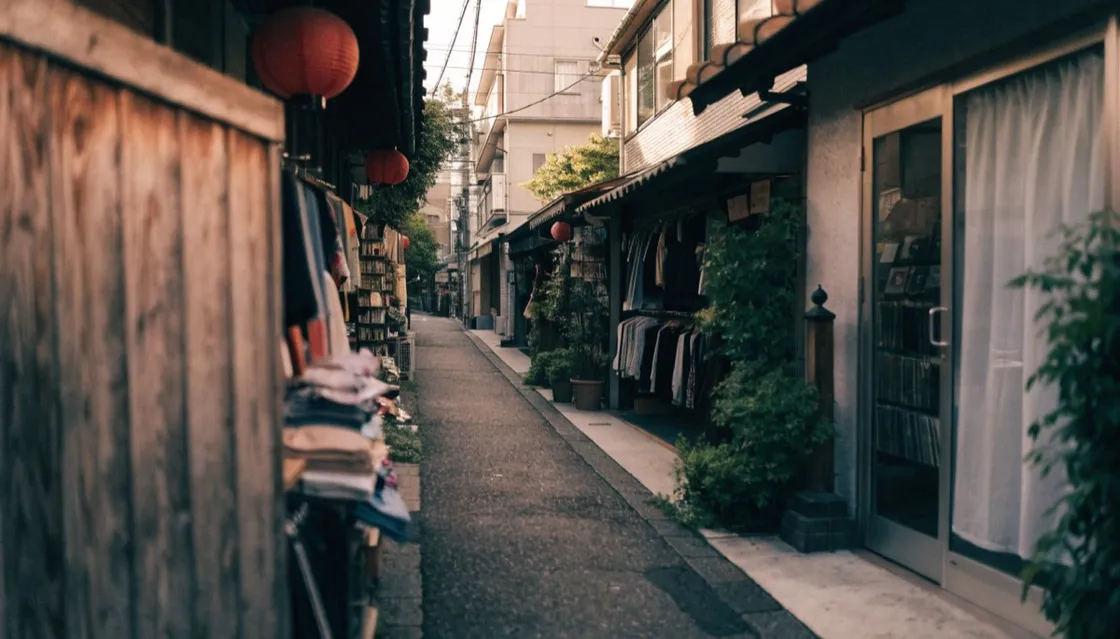
If you want a Tokyo base with real character but a rent bill that does not make you flinch, Koenji is one of the strongest picks on the west side of the city. It sits a few stops out from Shinjuku on the Chuo and Sobu lines, close enough that you can be in a major hub in ten to fifteen minutes, yet it keeps a scruffy, self-made feel that the polished districts lost long ago.
Nomads who land here tend to describe the same trade: slightly older buildings and narrower streets in exchange for cheaper living, a dense music and vintage scene, and neighbors who actually talk to each other.
Koenji rewards a certain kind of person. If your idea of a good base is a quiet minimalist tower, this is probably not it.
If you want a neighborhood where a day can drift from a slow coffee to a crate of second-hand records to a tiny live house without a train ride in between, it is hard to beat.
The city’s calmer neighborhoods ask you to slow down. Koenji asks you to join in.
Why nomads end up staying
The first draw is cost. Koenji has long been known as one of the more affordable characterful neighborhoods inside the loop of practical Tokyo, popular with students, musicians, and freelancers precisely because a modest budget stretches further here than in Shibuya-adjacent districts.
Exact rents move constantly and depend heavily on building age and size, so treat any number you see online as a rough starting point rather than a promise, but the general pattern holds: you pay less here for a similar commute than you would a few stops east.
The second draw is texture. This is a neighborhood built around small, independent businesses.
Vintage clothing shops sit shoulder to shoulder for entire blocks, especially around the shotengai arcades that spread out from the station. Record stores, tiny bars that seat six, secondhand bookshops, and standing izakaya fill the gaps.
Very little of it is a chain, which means the neighborhood keeps a personality that is hard to manufacture.
The third draw is the social ease. Koenji has a reputation as a place where regulars matter.
Spend a couple of weeks turning up at the same coffee counter or the same tachinomi and you tend to get recognized. For a nomad, that low-friction familiarity is worth a lot, because it is the thing that turns a place you are staying into a place you actually live.
Working from Koenji
Koenji is not a glass-tower coworking district, and that shapes how you work here. There are independent cafes suited to a laptop session, particularly the quieter kissaten-style spots and a handful of newer coffee shops, but seating is often small and etiquette matters.
As a rule, a single drink buys you a modest stretch of time, not a whole afternoon; if a place is filling up, it is polite to wrap up and move on. Reading the room is part of working in a neighborhood built on small rooms.
For heads-down days, many nomads pair Koenji living with a coworking membership one or two stops away, in Nakano or Shinjuku, where larger dedicated spaces cluster. The Chuo and Sobu lines make that trivial.
It is a common pattern across west Tokyo: sleep and eat somewhere with character, and commute a short distance to somewhere purpose-built when you need a full day of focus or a call-friendly booth.
If you work across time zones, Koenji has a quiet advantage. Because so much of the nightlife is small and local rather than club-scale, the neighborhood stays alive late without becoming chaotic.
A late call followed by a bowl of noodles or a single beer at a counter that is still open at midnight is an easy rhythm to fall into here.
Eating and drinking
Food in Koenji leans cheap, casual, and satisfying rather than refined. This is izakaya and standing-bar country, with ramen and curry shops, old-school Chinese diners, and enough tiny counters that you could eat somewhere different every night for a month.
Prices tend to sit on the friendlier end of the Tokyo range, which is part of why the neighborhood attracts people early in a freelance career.
The area around the station is a maze of drinking alleys, and the pleasure of the place is wandering until something looks right. Many of the best spots hold only a handful of seats, so going early or going solo helps.
If you are new, the standing izakaya are the gentlest entry point: you order a drink and a small plate, you stand, and there is no pressure to linger beyond your welcome.
A good Koenji night is rarely planned. You follow a lit doorway and see where the counter takes you.
Music, vintage, and the festival
Koenji’s identity is bound up with live music. The neighborhood is dense with small live houses, and its punk and underground scene is genuinely part of the local history rather than a marketing line.
You do not need to be a musician to enjoy it; wandering into a small show is one of the easiest and cheapest ways to spend an evening here.
The vintage clothing scene is the daytime equivalent. Whole streets are given over to secondhand and retro shops, and prices range from bargain bins to carefully curated racks.
Even if you travel light and are not buying, it is a good neighborhood to walk when you want a break from the screen.
Once a year, in late August, the neighborhood hosts the Koenji Awa Odori, one of Tokyo’s largest street dance festivals, when tens of thousands of dancers and enormous crowds fill the streets over a summer weekend. Dates shift year to year, so check locally before counting on it, but if you are basing here in late summer it is worth planning around rather than being surprised by.
The trade-offs to know
Koenji is honest about what it is. The building stock skews older, which can mean smaller rooms, thinner walls, and fewer of the modern conveniences you might find in a newer district.
The liveliness that makes the neighborhood fun also means some streets are noisy at night, so if you are noise-sensitive, pay attention to exactly where a place sits relative to the drinking alleys before you commit to a monthly stay.
It is also less English-friendly than the central hubs. Many of the small shops and bars operate entirely in Japanese, and that is part of the charm, but it does ask a little more of you.
A handful of basic phrases and a willingness to point and smile go a long way, and the payoff is a neighborhood that feels genuinely local rather than staged for visitors.
Is Koenji right for you
Choose Koenji if you want energy, affordability, and a strong sense of place, and you do not mind trading a little polish and quiet to get them. It suits nomads who are social, curious, and happy to work from a mix of small cafes and a nearby coworking space rather than a single glossy hub.
If your priority is a calm, minimal, English-easy base, Kuramae or a newer district may fit you better. But if you want a Tokyo neighborhood with a pulse you can actually feel, Koenji is one of the best-value ways to find it.
FAQ
Is Koenji good for daily remote work? It works well as a base, but plan on a mix. Small independent cafes are fine for shorter sessions, while a coworking membership a stop or two away in Nakano or Shinjuku covers full focus days and calls.
The short commute makes that split painless.
How affordable is Koenji really? It is known as one of the better-value characterful neighborhoods on the west side, popular with students and freelancers. Actual rent depends heavily on building age and size and changes constantly, so treat listings as a starting point and compare a few before committing.
When is the Koenji Awa Odori festival? It usually takes place over a weekend in late August and draws very large crowds. Exact dates change each year, so confirm locally if you are timing a stay around it, and expect the neighborhood to be packed and loud during the event.