Sorting Your Trash in Tokyo: A Nomad's Guide to Gomi
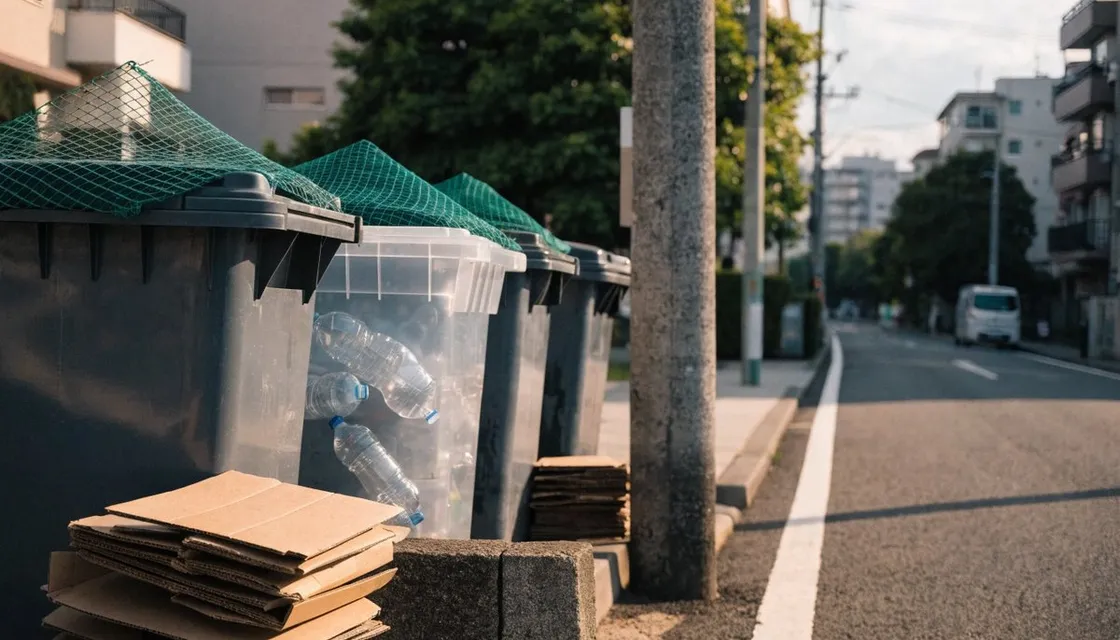
Here is the short version, because it is the thing that catches almost everyone out: in Tokyo you cannot just throw everything into one bag. Garbage is sorted into categories, each category is collected on its own fixed day, and you put it out on the morning of that day rather than the night before.
Learn the handful of categories that apply to your building, note the two or three collection days on your calendar, and the whole system becomes background noise. Get it wrong and your bag may be left on the curb with an apologetic sticker on it, which is the city’s polite way of asking you to try again.
None of this is meant to be a test. Tokyo simply runs one of the most detailed waste systems in the world, and it works because residents do the sorting at home.
Once you see the logic, it is genuinely easy to live with.
A city’s real rules live in its small daily habits. In Tokyo, how you handle your trash quietly signals that you understand where you are.
The categories you will actually deal with
Every ward (ku) sets its own exact rules, so the wording varies, but the everyday buckets are broadly the same across Tokyo. As a remote worker in a short-stay apartment or share house, these are the ones that matter.
Burnable trash (moeru gomi or kanen gomi) is the big one: food scraps, tissues, paper that cannot be recycled, most soft plastics in some wards, and general daily waste. This is collected the most often, typically a couple of times a week.
Non-burnable trash (moenai gomi or funen gomi) covers things like small metal items, ceramics, broken glassware, and certain hard plastics. It tends to be collected far less frequently, sometimes only once or twice a month, so it is worth knowing your date.
Recyclables are split further. PET bottles (the clear drink bottles with the triangular PET mark) are their own stream.
Cans and glass bottles are often grouped together or split into two. Paper and cardboard (newspapers, flattened boxes, magazines) usually get bundled.
Some wards also collect “plastic packaging” separately, marked with a small plastic symbol on the wrapper.
The practical move is not to memorize national rules but to find the one chart for your specific ward. Search the ward name plus “garbage separation English” and most Tokyo wards publish a clear multilingual guide, often as a downloadable PDF or a sortable app.
Timing is half the game
Two timing rules matter more than the sorting itself.
First, each category has a fixed weekly or monthly schedule tied to your address. Burnable might be Tuesday and Friday, PET bottles Wednesday, non-burnable the second and fourth Monday, and so on.
Miss the day and the bag simply stays with you until the next one comes around, which for non-burnable can be a long two weeks.
Second, you put trash out on the morning of collection, generally before a cutoff like 8 a.m., not the night before. This is partly about crows and cats, which are remarkably efficient at opening bags left out overnight.
Many collection points have a net or bin to keep animals out, and using it is expected.
If your building has an indoor garbage room (gomi-oki-ba), the rules relax a little because you can often drop sorted trash any time. Share houses and newer apartments frequently have one, and it is worth asking about on day one.
Bags, bins, and the quiet etiquette
Most wards want clear or semi-transparent bags so the contents are visible, and a few require official ward-branded bags you buy at the konbini or supermarket. Check which applies before you buy a giant roll of the wrong thing.
Rinse bottles and cans before recycling. Flatten cardboard and tie paper into neat bundles with string, which you can buy cheaply at any hundred-yen shop.
Remove caps and labels from PET bottles where your ward asks for it. These small steps are not fussiness for its own sake; they keep the collection points clean and are simply what neighbors do.
A note that saves real trouble: the bins inside convenience stores and stations are for trash generated there, not a place to quietly offload your household garbage. It is technically not allowed and locals notice.
Konbini bins are genuinely useful for a coffee cup or a bottle while you are out, and that is the spirit to use them in.
Big items and the things that do not fit a bag
Anything larger than a set size, roughly a longest side over 30 centimeters in many wards, counts as oversized garbage (sodai gomi) and cannot go out with normal trash. You book a collection in advance, usually online or by phone, pay a modest fee by buying a sticker at the konbini, write your reference number on it, and set the item out on the assigned day.
For a nomad this rarely comes up, but if you buy and later ditch something like a small shelf or a suitcase, this is the route.
Certain things are refused entirely by normal collection: electronics like laptops and phones, batteries, light bulbs, and spray cans often have their own drop-off points or take-back schemes. Large electronics and appliances fall under separate recycling laws.
When in doubt, the ward website lists where each awkward item goes.
Making it effortless
The system rewards a five-minute setup. Find your ward’s chart, put your two or three collection days into your calendar as recurring reminders, keep a couple of labeled bags going in a corner, and buy a roll of string and the right bags once.
After the first week it stops being a thing you think about.
If you are only in one place for a few weeks, ask your host or building manager for the specific rules and days rather than guessing. Most are happy to explain, and getting it right from the start means you never come home to a stickered bag and a slightly awkward feeling.
FAQ
What happens if I sort my trash wrong? Usually the bag is left at the collection point with a sticker noting the problem, and you are expected to take it back, re-sort, and put it out on the correct day. It is a gentle correction, not a fine in most everyday cases, but repeated mistakes can strain relations in a shared building.
Do I really have to put it out in the morning? In most residential areas, yes. Night-before dumping invites crows and cats and is discouraged or against the rules.
Buildings with an indoor garbage room are the main exception, so check whether yours has one.
Where do I throw away a laptop, batteries, or spray cans? Not in regular trash. These usually have dedicated drop-off points, retailer take-back programs, or small-electronics recycling boxes.
Your ward’s website or a quick search for the item plus your ward name will point you to the right place.